One Person, One Stage, No Excuses: How the Solo Show Became Theater's Most Honest Form
One Person, One Stage, No Excuses: How the Solo Show Became Theater's Most Honest Form
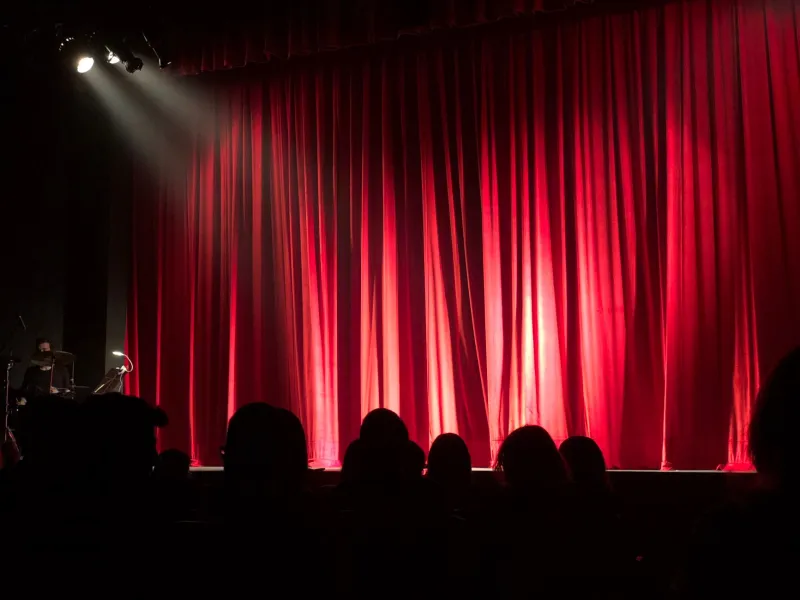
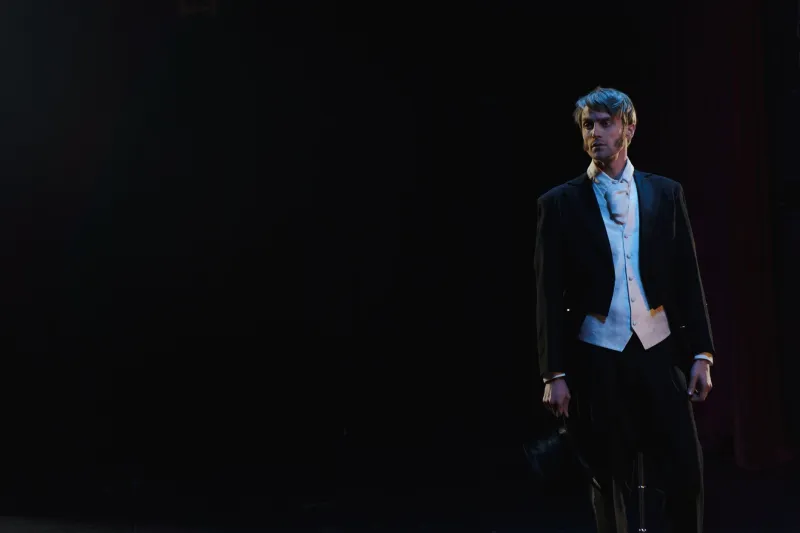
There's a particular kind of silence that falls over a theater when a single performer walks out alone. No ensemble waiting in the wings. No elaborate set to hide behind. Just one person, a spotlight, and whatever they've decided to say to a room full of strangers. It's terrifying. It's also, increasingly, exactly what American audiences are showing up for.
The solo performance — long dismissed as a niche format, the kind of thing you stumble into at a 99-seat black box on a Tuesday night — is having a genuine moment. And not just off-Broadway. From streaming specials that rack up millions of views to sold-out runs at regional theaters, the one-person show is quietly proving it might be the most vital form live performance has to offer right now.
Why Now?
There's no single explanation for the resurgence, but the timing makes a kind of emotional sense. After years of media oversaturation — algorithmic content, franchise storytelling, spectacle stacked on spectacle — something in the cultural appetite has shifted. People are tired of noise. They want to feel something specific, something real, something that couldn't have been generated by a committee or a content strategy.
The monologue offers exactly that. When one performer carries an entire evening on their shoulders, every word is a choice. Every pause lands differently. There's no supporting cast to absorb a weak moment, no dazzling lighting cue to distract you from a thin scene. The form is ruthless in its demands — and that ruthlessness is precisely what makes it compelling.
Actors and writers who've spent years in ensemble productions will tell you that solo work is a different discipline entirely. It's not harder in the way that scaling Everest is harder than climbing a hill. It's harder in the way that a conversation is harder than a speech. You have to be present in every single moment, because the audience has nowhere else to look.
The European Tradition and What It Taught American Stages
In Central European theater culture — particularly in German-speaking countries — the solo performance has never really gone out of fashion. There's a long tradition of the Sprechtheater, a text-driven, performer-centered form that prizes language and psychological depth over visual spectacle. Austrian and German theater schools train performers to inhabit a text from the inside out, to find the architecture of a monologue not in its dramatic peaks but in its silences and contradictions.
That tradition has been quietly influencing American performance in ways that don't always get credited. Performers with roots in European training — whether from conservatories in Vienna, Zurich, or Berlin — bring a different relationship to stillness on stage. They're not afraid of the empty moment. They understand that an audience can hold more than we give them credit for, if the performer trusts them enough to wait.
Several artists working in the US today carry that sensibility with them, even when they're telling deeply American stories. The influence shows up in pacing, in the willingness to let a moment breathe, in a certain confidence that the story itself — not the staging — is the thing worth protecting.
Performers Redefining What One Voice Can Do
Look at what's been happening on American stages over the past few years and the range is striking. Hannah Gadsby's Nanette and Douglas started as live shows before becoming Netflix phenomena, and they work precisely because they refuse the conventions of the format they appear to inhabit. Gadsby deconstructs the comedy special from within, using the structure of the monologue to interrogate the structure of the monologue. That's a very theatrical move, and it landed with audiences who may never have set foot in a theater.
On the more traditionally theatrical end, performers like Mike Birbiglia have built careers on the one-person show that blur the line between stand-up, storytelling, and genuine dramatic writing. His productions have moved from off-Broadway to Broadway and back again, picking up audiences who didn't think they were theater people until they found themselves genuinely moved.
Then there are the less visible but arguably more adventurous artists — performers doing solo work in regional theaters, at festivals like the Edinburgh Fringe's American pipeline, or in residencies that rarely make the national press. These are the people pushing the form hardest, often drawing on memoir, physical theater, or hybrid approaches that wouldn't exist without the freedom that solo performance allows.
The Monologue Is Not a Lesser Thing
Somewhere along the way, American theater culture absorbed the idea that more is more — bigger casts, bigger budgets, bigger ambitions. The solo show got categorized as a stepping stone, a calling card, something you do before you graduate to the real work. That framing has always been wrong, and enough people are starting to say so out loud.
The monologue isn't a simplified version of theater. It's theater stripped to its original premise: a person with something to say, and an audience willing to listen. The form predates the ensemble. It predates the proscenium. It predates pretty much everything we associate with modern theatrical production. And it survives because it does something that spectacle cannot — it creates the illusion, or maybe the reality, of genuine intimacy between a stranger and a room.
When a solo performer is really working, the audience stops experiencing themselves as an audience. They start experiencing themselves as confidants. That's not a trick. That's the whole point.
What Comes Next
The streaming boom has done something unexpected for live solo performance: it's created a new audience for it. People who discovered Gadsby or Mike Birbiglia or Spalding Gray's archived work online have started seeking out live versions of that experience. They want to be in the room. They want the version that can't be paused or rewound.
For performers and writers thinking about where to put their creative energy, the one-person show is looking less like a compromise and more like an opportunity. The overhead is low. The artistic control is total. And the audience, it turns out, was always ready for it — they just needed to be reminded that a single human voice, given enough space and enough honesty, is more than enough to fill a stage.
The monologue never really went away. It was just waiting for us to get tired enough of everything else to notice it again.