Pause, Breathe, Feel: Why the Theater Intermission Deserves a Standing Ovation of Its Own
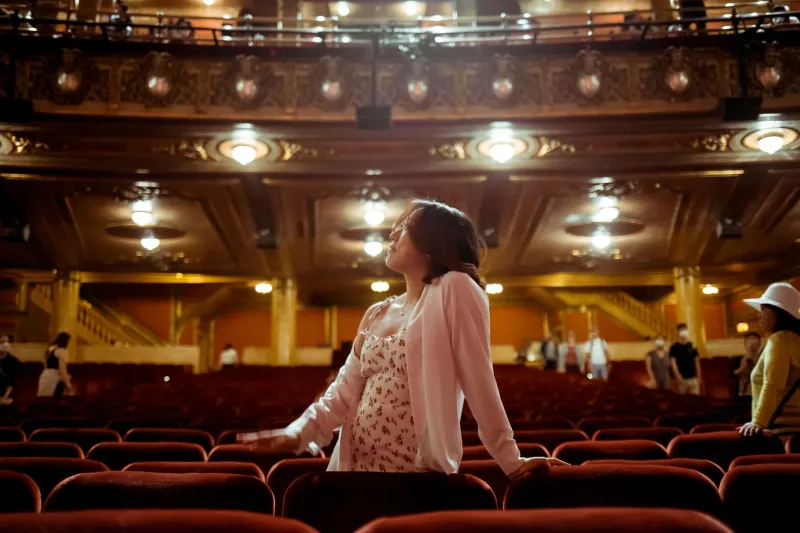
Somewhere between the rise of Netflix binge culture and the cult of the 90-minute no-break production, American theater quietly started cutting one of its most underappreciated gifts: the intermission. Fifteen minutes. A lobby. Maybe a glass of overpriced Chardonnay. And yet, in that small pocket of time, something genuinely human used to happen.
We talked to each other. We sat with what we'd just seen. We let the story breathe before it breathed on us again.
Now, more and more productions — especially in off-Broadway spaces and touring companies chasing efficient runtimes — are dropping the intermission entirely. And while the artistic reasoning is sometimes sound, something feels like it's getting lost in the edit.
The Case Against Pausing (And Why It Misses the Point)
The argument for cutting intermissions usually goes something like this: breaking the spell ruins the momentum, modern audiences have shorter attention spans, and besides, the best films don't stop in the middle. Fair enough, on the surface.
But theater isn't film. It never was. The entire contract between a live performer and a live audience is built on shared presence — on the fact that something unrepeatable is happening in real time, in a room full of breathing, feeling human beings. Film is edited. Theater is experienced. And experience, unlike content, sometimes needs room to settle.
There's also a quiet irony in the attention-span argument. We're not cutting intermissions because audiences can't handle complexity. We're cutting them because producers are nervous about losing momentum — which is really a producer's anxiety, not an audience's.
What Actually Happens in That Lobby
Ask anyone who's seen a genuinely great first act — Hamilton, Angels in America, Who's Afraid of Virginia Woolf? — what the intermission felt like, and they'll usually pause before answering. Because the pause itself is the answer.
There's a cognitive and emotional process that kicks in the moment the lights go up at halftime. Psychologists call it consolidation — the brain's way of organizing new emotional information into something meaningful and lasting. When we sit with a story mid-telling, we're not disengaging from it. We're actually deepening our relationship to it.
In the lobby, strangers become collaborators. "Did you catch what she said in that second scene?" "I didn't see that twist coming." "I think he's going to die in the second act." These aren't trivial exchanges. They're the beginning of communal interpretation — the thing that separates a theatrical experience from a solitary one.
European theater, particularly in the German-speaking tradition that informs so much of Hochfellner's perspective, has always understood this. The Pause — and yes, they have a specific word for it — is treated as part of the production's architecture. Directors build toward it. Dramaturgs consider where the audience's emotional state will be at that exact moment. It's not an accident. It's a design choice.
The German-Speaking World Got This Right
In Vienna, Salzburg, and Munich, a night at the theater is a full evening. Curtain at 7:00 p.m., intermission at 8:30, final bow at 10:15, dinner afterward. The intermission isn't a logistical necessity — it's a social institution. People dress for it. Conversations are continued from last season. Opinions are formed and reformed.
There's something almost radical about that, by American standards. We tend to treat art as a product to be consumed efficiently. You get in, you absorb the thing, you get out and post about it. The European model treats art more like a meal — something to be savored, shared, and discussed while it's still warm.
The American theater tradition has, at its best, always flirted with this sensibility. Broadway's golden age was built on the assumption that audiences would spend an entire evening at the theater. The intermission was part of the ticket. It was part of the experience you were paying for.
What We Lose When We Cut It
Here's what doesn't get said enough: the intermission is also where audiences decide if they care.
A powerful first act, followed by fifteen minutes of genuine anticipation, can transform a lukewarm theatergoer into a true believer. The waiting becomes part of the wanting. You're not just watching a story unfold — you're invested in it, anxious about it, maybe even a little afraid of where it's going.
Cut that pause, and you cut the space where investment grows. You're asking audiences to feel everything at once, without a moment to realize what they're feeling.
And there's the practical reality, too. Theater is already asking a lot of its audience. Tickets are expensive. Parking is a nightmare. Babysitters cost money. People show up to the theater having made a real commitment. The intermission is, in some ways, a reward for that commitment — a chance to exhale, to connect, to remember that you chose to be here, in this room, with these people, watching something real.
Bringing the Pause Back
This isn't a call to artificially inflate runtimes or to mandate intermissions for 75-minute experimental pieces that don't need them. Context matters. Some stories are better told without interruption, and a skilled director knows the difference.
But for the longer, emotionally ambitious productions that American theater does so well — the big dramas, the sprawling musicals, the complex human stories — the intermission isn't a concession to audience weakness. It's an act of artistic generosity.
It says: We trust you to hold this story. We trust you to feel something and then come back for more.
At Hochfellner, we think about this a lot — about what it means when art takes its time, when storytelling respects the audience enough to let them breathe. The best performances, on any stage, leave room for the audience to participate. The intermission is one of the oldest, simplest ways of doing exactly that.
So the next time you're at a show and the lights come up at halftime, resist the urge to check your phone. Stand in the lobby. Listen to the couple next to you argue about the protagonist's motives. Get the overpriced Chardonnay. Let the story sit.
That fifteen minutes? It might be the best part of the whole night.