Before Anyone Says a Word: The European Rehearsal Secrets That Change Everything
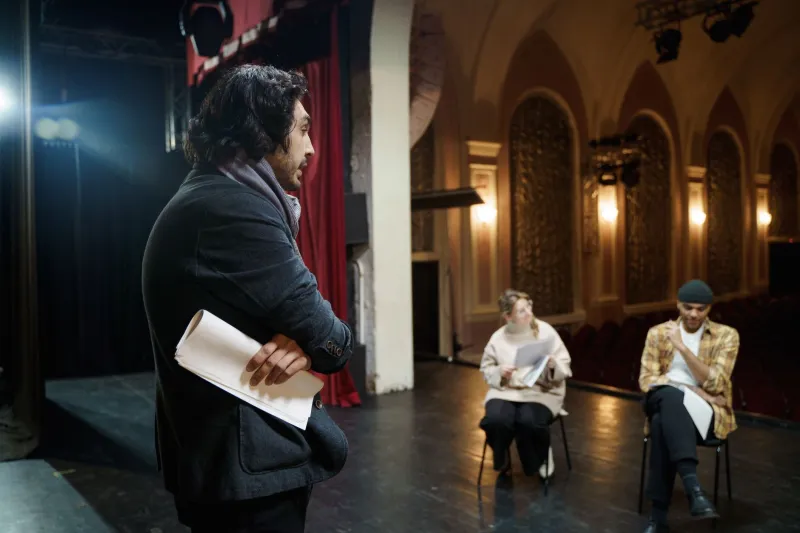
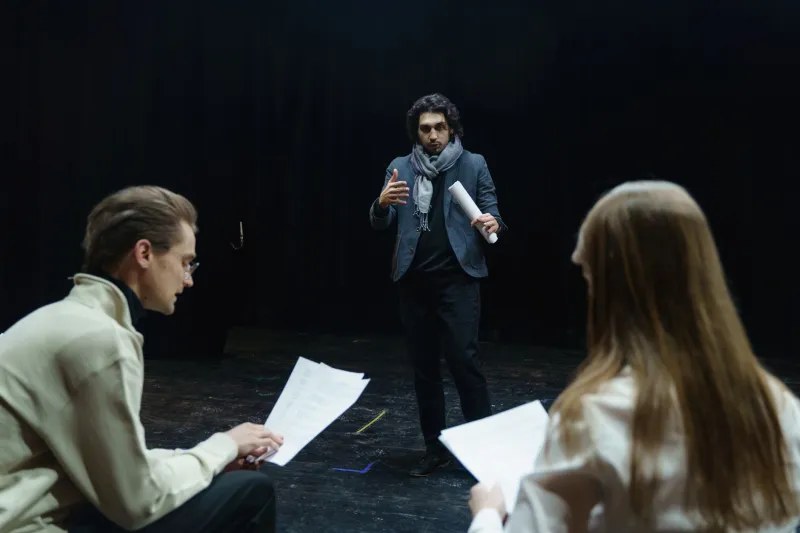
Picture a rehearsal room in Vienna. The cast has been called for ten o'clock. Scripts are on the table — but nobody's touching them. Instead, the director asks everyone to walk. Just walk. Through the space, around each other, without making eye contact. No talking. No explanation. Just bodies moving through air.
To an American actor trained on Stanislavski-via-Strasberg, this might feel like a waste of time. Where's the table read? When do we discuss intentions? But give it twenty minutes, and something shifts. The room starts to breathe differently. The actors start to feel each other — their weight, their rhythm, the invisible push and pull of human presence. By the time the director finally calls a halt, the scene hasn't started yet. And somehow, it already has.
This is the world that European theater — particularly the German, Austrian, and Swiss traditions — has been working from for decades. And it's a world most American directors have barely glimpsed.
The Table Read Problem Nobody Talks About
The table read is practically sacred in American theater and film. You gather the company, you sit down, you go through the script from top to bottom. It's efficient. It's organized. It makes everyone feel like they're on the same page.
It also, arguably, locks the work into the brain before the body ever gets a chance to weigh in.
When you read a scene out loud at a table, you're making interpretive decisions immediately — consciously or not. The voice finds a shape for the character. The mind starts filing things under "this means that." By the time you stand up and move, you're already working from a blueprint. The physical life of the scene becomes an illustration of the intellectual analysis, rather than a source of discovery in its own right.
European directors — particularly those trained in the traditions that run through Berlin, Zurich, Salzburg, and Vienna — tend to flip that sequence. The body first. The text later. Sometimes much later.
Moving Through Space as a Form of Research
One of the core techniques you'll encounter in Central European rehearsal rooms is what some practitioners simply call Raumarbeit — work with space. Before any scene is staged, before blocking is discussed, actors are asked to inhabit the environment physically. They walk the stage. They find corners. They discover where they feel exposed and where they feel sheltered. They notice what it's like to stand far from another person and what it costs to close that distance.
This isn't abstract movement theater. It's research. The director is watching what the body already knows — which relationships feel tense, which feel comfortable, where the natural gravitational pulls in a scene might live. Actors aren't performing yet. They're gathering information through sensation.
The insight underneath this approach is straightforward but powerful: emotional memory isn't just a mental archive. It's stored in the body. In the spine. In the chest. In the legs that want to run or the hands that don't know where to go. If you bypass the body and go straight to the text, you're cutting off a huge portion of what makes a performance feel true.
Breath Before Words
Another technique common in the German-speaking theater world — and worth importing directly — is the deliberate use of breath work before any dialogue is attempted. This goes beyond basic vocal warm-ups. Directors use group breathing exercises to establish a shared rhythm among the ensemble. When a cast breathes together, they start to synchronize in ways that are subtle but deeply felt by an audience.
Some directors will take a scene's emotional arc and ask the cast to breathe it — literally. Where does the breath open up? Where does it constrict? Where does it stop altogether? This maps the scene's tension onto the body before a single scripted word creates an expectation.
For American actors used to jumping into emotional beats through psychological justification, this can feel disorienting at first. But the results tend to be more grounded, less performed. The emotion emerges from a physical state rather than being reached for intellectually.
Impulse Over Intention
Here's a phrase that comes up repeatedly in European rehearsal rooms: Impuls vor Absicht — impulse before intention. It's a reminder that the most alive moments in performance happen when an actor reacts to what's actually in the room, not what they've decided should be in the room.
To cultivate this, directors will often run scenes without letting actors know what's coming. A scene partner might do something unexpected — move differently, deliver a line with a completely different energy. The other actor has to respond in real time, without falling back on a rehearsed plan. It's uncomfortable. It's also revelatory. You find out very quickly what you actually feel versus what you've decided to perform.
This technique is especially useful for scenes that have gone stale — the ones where everyone knows exactly what's going to happen and the audience can feel it. Introducing genuine unpredictability, even briefly, rewires the scene's nervous system.
What American Directors Can Borrow Right Now
You don't need a two-year conservatory program in Zurich to bring any of this into your rehearsal process. A few practical starting points:
Start rehearsal in the body. Even fifteen minutes of unscripted movement before you open the script can change the quality of what follows. Ask actors to walk the space, find their character's physical center, and notice how it feels to be near or far from the other people in the scene.
Delay the table read. Try running a physical exploration of a scene — with no words — before anyone reads the text aloud. What do the bodies want to do? Where do they want to go? Let that inform the staging before the script does.
Use breath as a rehearsal tool. Before a difficult scene, have the cast breathe together for two minutes. Seriously. It sounds small. It changes everything about the quality of attention in the room.
Introduce genuine surprise. Give one actor a private note that changes what they're going to do in the next run. Don't tell the others. Watch what happens when real surprise enters the room.
The Scene That Lives in the Body
What European theater traditions understand — and what the best American directors are slowly coming around to — is that a scene isn't primarily a text. It's an event. It happens between bodies in space, in real time, with real breath and real weight. The words are the last layer, not the first.
That rehearsal room in Vienna? By the time those actors finally opened their scripts, they already knew where the scene lived. They'd found it in their feet, their chests, the space between them. The words had somewhere to land.
That's the secret. And honestly, it's been sitting there all along.