Built to Last: What European Theater Conservatories Know About Making a 40-Year Career
There's a particular kind of story Americans love to tell about performers. The one where a kid from a small town gets discovered, books a pilot, lands a franchise, and becomes a household name before their 25th birthday. It's a great story. It makes for excellent press. And it almost never produces an artist who's still working — really working, with depth and range — thirty years later.
Europe has a different story. It's less cinematic. It involves a lot of cold rehearsal rooms, repetitive physical exercises, and instructors who won't let you move on until you've understood something in your body, not just your head. It's not glamorous. It doesn't trend. And it quietly turns out performers who are still commanding stages and screens well into their fifties and sixties.
So what exactly is happening over there that we're missing over here?
The Long Game, by Design
Take the Max Reinhardt Seminar in Vienna. Named after the legendary Austrian theater director whose influence stretched from Berlin to Broadway, the school operates on a philosophy that would make most American drama programs flinch: students spend years on fundamentals before they're ever encouraged to think about their "brand" or their "type." The early curriculum is almost monastic in its focus — voice, breath, movement, classical text — and instructors are known for cycling students back through the same material repeatedly, not as punishment, but because repetition is the point.
"In Vienna, they are not interested in what you can do on your best day," says one performer who trained there before relocating to New York. "They want to know what you do on your worst day, when you're tired and you don't feel inspired and the room is cold. That's the instrument they're building."
The Otto Falckenberg Schule in Munich operates similarly. Associated with the Münchner Kammerspiele — one of Germany's most prestigious repertory theaters — the school places students inside a working professional environment almost immediately. Not to perform, but to observe, assist, and absorb the rhythms of a company that has been producing serious work for over a century. The lesson isn't taught in a classroom. It's osmotic.
Rehearsal as Identity, Not Preparation
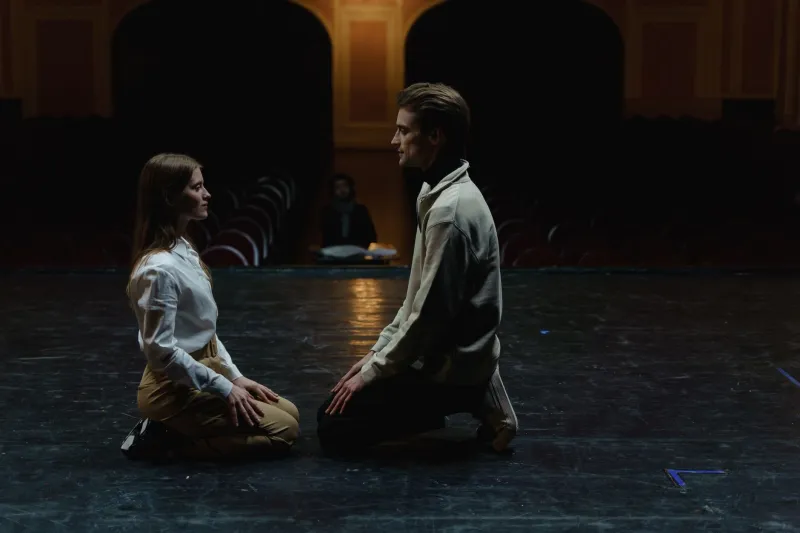
Here's the philosophical gap that's hardest to explain to American audiences: in the European conservatory tradition, rehearsal isn't what you do before the performance. It's the core of what you are as an artist.
In practical terms, this means students spend enormous amounts of time in process that will never be seen — improvisation exercises that go nowhere, scene work that gets scrapped, physical training that has no immediate application. American drama schools, under pressure to produce graduates who can audition and book work quickly, tend to front-load technique and move toward performance readiness fast. The European model does something almost counterintuitive: it slows you down on purpose.
Performers who've trained on both continents describe the difference in strikingly similar terms. One actor who studied at a conservatory in Zurich before completing an MFA program in Chicago put it this way: "In Switzerland, my teachers were always asking me to go deeper into something I thought I'd already finished. In Chicago, we were always moving on to the next thing. Both have value. But only one of them taught me how to sustain a character over a long run without burning out."
That sustainability is, it turns out, the whole point.
What Casting Directors Are Starting to Notice
American casting directors — particularly those working in regional theater and prestige television — have been quietly paying attention to performers with European conservatory training for years. Not because of some romanticized notion of the Old World, but because of something measurable: those performers tend to be more consistent, more adaptable, and more capable of doing deep ensemble work without ego getting in the way.
"There's a quality of listening that I notice," says one New York-based casting associate who works across theater and streaming. "Performers trained in the European repertory tradition aren't waiting for their moment. They're actually in the scene with the other person. That sounds like a small thing, but it changes everything on camera."
It's that ensemble orientation — again, baked into the European model from day one — that American productions are increasingly trying to replicate. Shows with long runs, prestige drama series with complex ensemble casts, live performance projects that require performers to sustain a character night after night: these are the contexts where the European training philosophy pays dividends in ways that are hard to fake.
Borrowing Without Copying
Some American drama programs are taking notes. Yale School of Drama has long incorporated elements of European physical theater training. Juilliard's drama division has historically maintained connections to the British and European classical traditions. But there's a growing conversation at smaller conservatories and MFA programs about whether the American training model — often built around audition technique, on-camera work, and industry readiness — has overcorrected away from the kind of slow, unglamorous foundational work that produces longevity.
The challenge, of course, is cultural. American entertainment is structured around speed. Pilot season, showcase season, social media presence, the relentless pressure to be visible and bookable right now. Telling a 22-year-old drama student to spend three years doing voice exercises and classical text analysis before worrying about their reel is a hard sell in a system that rewards the breakout over the slow burn.
But the performers who last — the ones still doing extraordinary work at 50, still surprising audiences, still growing — tend to have something in common. They were built for the long game, somewhere along the way. Whether that happened at the Max Reinhardt Seminar or in a cold church basement in Ohio with a demanding teacher who refused to let them rush, the foundation looks remarkably similar.
The Rehearsal Room as Teacher
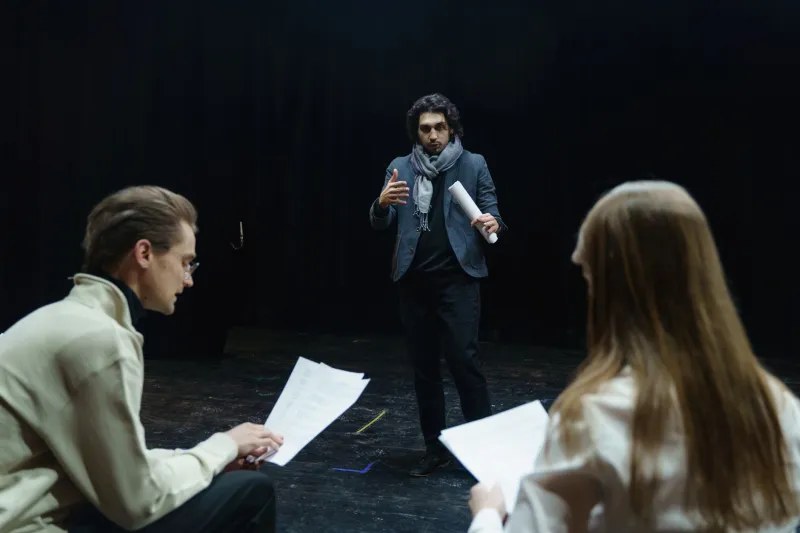
Maybe the most transferable lesson from the European conservatory tradition isn't a specific technique or curriculum. It's an attitude toward process itself. The idea that the rehearsal room isn't a waiting room for the real thing — it's where the real thing happens. That getting better slowly, over years and decades, is not a consolation prize for people who didn't get discovered. It's the actual work.
American audiences are drawn to the overnight success story because it's exciting. But if you look at the performers who genuinely move you — who make you lean forward in your seat or forget you're watching a screen — they almost always have years of invisible work underneath the visible moment.
Europe just built institutions around that truth. We're still figuring out how to tell it as a story worth telling.