What Happens Before the First Line: The Inner Work European Performers Do That Most Americans Never Learn

Walk into most American acting studios and you'll find mirrors, movement exercises, vocal drills. Maybe some Meisner repetition. Maybe a scene from Glengarry Glen Ross taped to the wall. The emphasis, almost always, is on doing — on the visible, the audible, the technically refined.
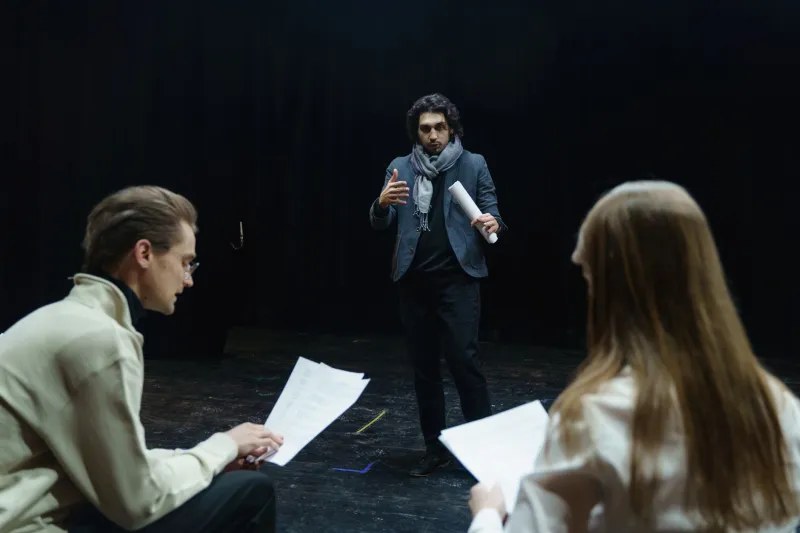
Now walk into a conservatory rehearsal room in Vienna or Zurich. Same coffee smell, probably. But something else is happening before the work even starts. Someone is sitting quietly in the corner. Another person is writing in a journal. A third is staring at the ceiling — not daydreaming, but doing something deliberate. Something internal.
That distinction, between the outward craft and the inward preparation, might be one of the most underappreciated gaps between American and European performer training. And it's a gap that a growing number of US-based artists who trained abroad are starting to talk about openly.
The Psychological Tradition Nobody Exported
German-speaking theater has a long relationship with the interior life of the performer. It's baked into the dramaturgical culture. In Germany, Austria, and Switzerland, theater companies routinely employ a Dramaturg — a role that barely exists in American regional theater — whose job is partly to help actors understand not just what a character does, but why, at a depth that goes well beyond the script's surface.
But the psychological preparation starts earlier than rehearsals. At institutions like the Mozarteum in Salzburg or the Ernst Busch Academy in Berlin, students are trained in what you might loosely call mental resilience practices. These aren't wellness trends bolted onto a curriculum. They're considered foundational to the craft itself.
Journaling as dramaturgical self-reflection is one example. Students are asked to write — not about their characters in the abstract, but about their own emotional responses to the material. What does this scene stir in you personally? Where does your resistance live? What are you afraid to bring to this role?
Those aren't therapy questions, though they can feel like it. They're craft questions, rooted in the belief that a performer who hasn't examined their own psychology will always hit a ceiling.
Meditation Isn't a Wellness Perk — It's a Rehearsal Tool
Mindfulness and meditation have become fixtures in American wellness culture, showing up in corporate retreats and yoga studios and NFL locker rooms. But in European conservatory training, particularly in the German-speaking tradition, contemplative practice isn't a lifestyle add-on. It's a rehearsal tool.
The idea is straightforward: a performer who cannot quiet their own mental noise cannot truly listen. And listening — to a scene partner, to the space, to the silence between lines — is where the real work happens.
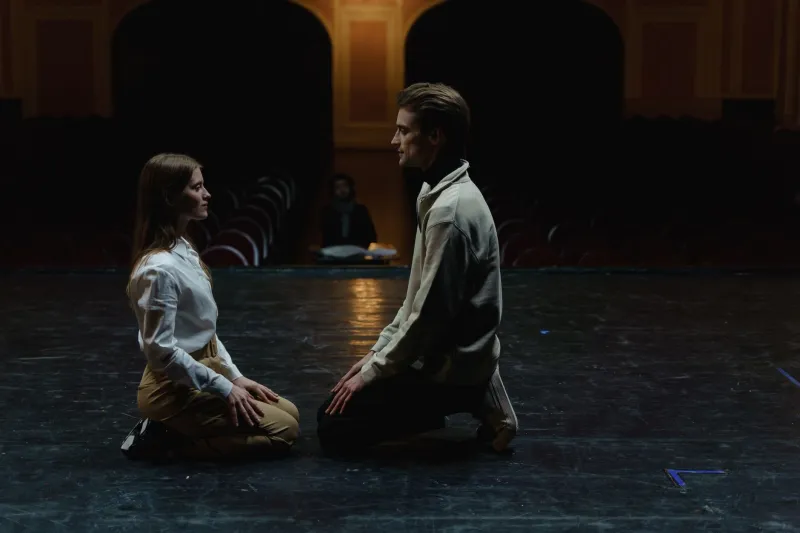
Several US-based performers who trained in Germany or Austria describe a kind of culture shock when they returned home. "In the States, there's this pressure to always be performing even in the rehearsal room," says one New York-based stage actor who trained at a conservatory in Munich. "In Germany, the director would sometimes just... let us sit with the material. No talking. No blocking. Just sitting with it. At first I thought I was wasting time. Now I think it was some of the most productive time I've ever spent in a rehearsal."
That sitting-with-it practice — what some European teachers call Innehalten, a German word meaning roughly "to pause and reflect" — runs counter to the American instinct to iterate fast, fail forward, keep moving. It asks performers to slow down enough to notice what's actually happening inside them before they try to project anything outward.
The Body Follows the Mind (Not the Other Way Around)
American actor training, heavily influenced by Stanislavski's American interpreters and the legacy of the Method, often works from the outside in — use physical actions to unlock emotion. European training, particularly in the German-speaking world, tends to flip that sequence. The inner landscape gets mapped first. The body follows.
This isn't a universal rule, and plenty of European schools work with physical approaches. But the emphasis on psychological groundedness before physical expression is a consistent throughline in how performers from Austria, Germany, and Switzerland describe their training.
For screen work especially, this matters enormously. The camera doesn't reward effort — it rewards truth. And truth, in the acting sense, tends to come from performers who have done the interior work. Who know why their character breathes the way they breathe in a particular moment. Who have sat with the material long enough that the performance stops being a performance and starts being a presence.
It's something directors working with stage-trained European actors often notice. There's a quality of attention, of listening, of being-in-the-room that reads differently on camera. Less manufactured. More inhabited.
What American Coaches Are Starting to Borrow
The good news is that some of this is making its way into American training, slowly. A handful of coaches in New York and Los Angeles — some of whom trained in Europe, others who've simply gone looking for new frameworks — are incorporating dramaturgical journaling, contemplative pre-rehearsal practices, and structured self-reflection exercises into their work.
The challenge is cultural. American entertainment is a fast industry. Pilots get picked up in March and shoot in June. Broadway rehearsals run four to six weeks. There's not a lot of room for sitting quietly with the material. The economic pressures push toward efficiency, toward technique that can be applied quickly.
But efficiency and depth aren't always the same thing. And some of the most compelling performances on American stages and screens right now are coming from performers who've found ways to do the inner work even inside a compressed timeline. Who have internalized the Innehalten enough that they can access it in a lunch break, on a subway ride to set, in the quiet minute before they step in front of the camera.
The Rehearsal Room No One Talks About Is Inside You
There's something almost countercultural about insisting that a performer's most important rehearsal space is their own mind. In an industry that rewards output, that celebrates the visible, that tends to measure craft by what shows up on stage or screen, the inner work is easy to dismiss as soft. As optional.
But the performers and teachers who've been shaped by the German-speaking tradition will tell you it's the opposite of optional. It's the foundation. Everything else — the technique, the physicality, the vocal range, the emotional availability — rests on how well a performer knows their own interior landscape.
American theater and film have always been good at borrowing what works. The question is whether the industry is ready to borrow something that's harder to see, harder to measure, and harder to rush. Something that asks you to sit still before you start moving.
If the performers coming back from conservatories in Vienna and Berlin are any indication, the answer is starting to look like yes.