Two Days, No Monologue: What European Audition Culture Gets Right That America Is Missing
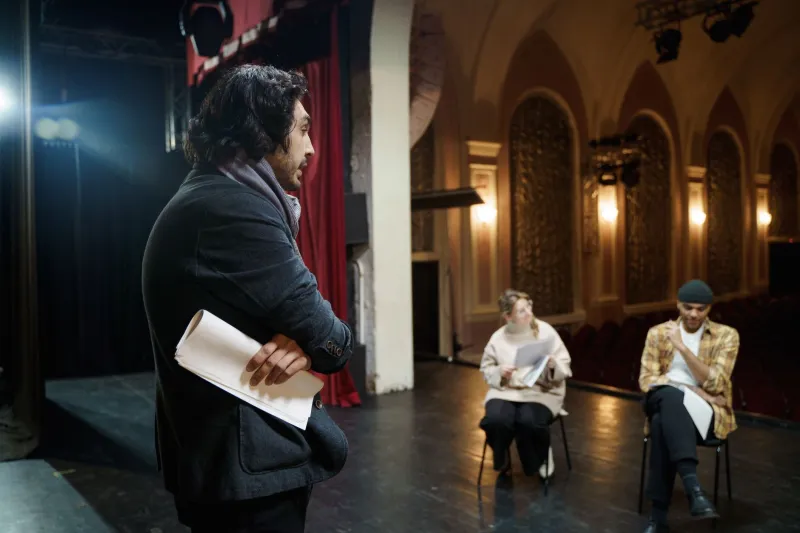
Imagine showing up to an audition and being told you won't perform a prepared piece. Not today, not tomorrow. Instead, you'll spend the next two days in a room with twelve other actors, doing ensemble exercises, responding to prompts you've never seen, and building a short scene with a stranger — all while the director watches from a corner, saying almost nothing.
For most American actors, that scenario sounds either like a dream or a nightmare, depending on who you ask. For performers trained in Germany, Austria, or the Netherlands, it's just called Tuesday.
The gap between how the US and Europe approach the audition process is wider than most people realize — and understanding it says a lot about what each system values, who gets seen, and who gets passed over.
The 90-Second Problem
The standard American audition model is built around efficiency. Casting directors are busy. Theaters have limited time. So actors get a slot — often 90 seconds to two minutes — to deliver a prepared monologue, maybe read a few lines cold, and leave. The whole thing can feel less like an artistic conversation and more like a livestock fair.
There's nothing inherently wrong with wanting efficiency. But the format has a built-in bias toward performers who are polished, quick, and comfortable performing in isolation under pressure. What it doesn't measure very well is how someone listens, how they adapt, how they hold space in an ensemble, or how they handle the unexpected.
Those are, arguably, the things that make a great stage actor.
"The American system rewards a very specific skill set," says one performer who trained at a conservatory in Vienna before relocating to New York. "You learn to walk in, hit your mark, be memorable in 90 seconds, and walk out. That's its own craft. But it doesn't tell anyone how you'll behave in a six-week rehearsal process with ten other people."
What a Multi-Day Callback Actually Looks Like
In many European theater systems — particularly in German-speaking countries and Scandinavia — the audition process is structured more like a workshop than a performance. Major repertory theaters and state-funded companies often bring finalists in for what can feel closer to a residency than an audition.
These callbacks might include:
- Ensemble exercises designed to reveal how a performer functions in a group dynamic — whether they lead, follow, dominate, or disappear
- Improvisational challenges built around emotional or situational prompts the actor has never encountered before
- Text work that's assigned on the spot, giving the panel a chance to see how quickly someone absorbs and interprets new material
- Physical and movement sessions that assess how a performer uses their body, not just their voice
- Collaborative scene-building with other auditioners, which shows chemistry, generosity, and instinct simultaneously
The goal isn't to see who can perform the best-prepared piece. It's to understand who the person is when the safety net of preparation is gone.
This approach takes longer. It costs more. And it requires casting panels to engage more deeply with what they're seeing. But the payoff, according to performers and directors who've worked in both systems, is a far richer picture of what a performer can actually do.
The Repertory Mindset Behind It All
Part of why Europe auditions this way comes down to how its theaters are structured. Many of the major companies — particularly in Germany and Austria — operate as repertory ensembles. They're not casting one show at a time. They're building a company of artists who will work together across multiple productions, sometimes for years.
When you're hiring for an ensemble rather than a single role, the calculus changes completely. You're not just asking "can this person play Hamlet?" You're asking "can this person be part of a living artistic organism?" That's a question a 90-second monologue simply cannot answer.
American regional theater has always flirted with the ensemble model — companies like Steppenwolf in Chicago or the Oregon Shakespeare Festival have built their identities around it — but the audition culture hasn't fully caught up. Most US auditions still treat each hire as an individual transaction rather than a community investment.
What Gets Lost in the American Model
Here's the uncomfortable part: the performers who thrive in a 90-second audition format are often not the same performers who thrive in a six-week rehearsal room. The qualities that make someone magnetic in a short burst — precision, control, immediate charisma — can actually work against the kind of openness and flexibility that long-form ensemble work demands.
Meanwhile, the actor who needs three days to find something true, who blooms slowly, who does their best work in response to other people — that person gets filtered out before anyone ever sees what they're capable of.
"I know performers who are extraordinary," says a director who has worked extensively in both Berlin and Los Angeles, "but they're terrible auditioners in the American sense. They're not built for the sprint. They're built for the marathon. And the system just... never finds them."
That's not a small loss. That's a structural failure.
Can America Learn From This?
Some American companies are already experimenting. Certain graduate programs have begun incorporating ensemble-based audition weekends. A handful of regional theaters have extended their callback processes to include group work and improvisation. It's happening — just slowly, and not yet at scale.
The bigger obstacle isn't knowledge. It's economics. Multi-day audition processes cost money, require more staff time, and demand that casting directors slow down in an industry that has spent decades optimizing for speed. Asking Broadway or major regional houses to restructure their audition pipelines is a heavy lift.
But the argument for doing it is strong. If American theater wants to find the full range of talent available to it — not just the talent that learned to sprint — the process itself needs to evolve.
Europe didn't stumble into its audition culture by accident. It built it around a specific philosophy: that the best way to understand a performer is to put them in conditions that resemble actual work. That philosophy, translated thoughtfully into American contexts, could change who gets seen, who gets cast, and ultimately, what ends up on stage.
The Bigger Picture
At Hochfellner, we think a lot about what moves between worlds — between stages and screens, between European and American performance traditions, between the classical and the contemporary. The audition room is one of those invisible spaces where culture gets made before anyone buys a ticket.
What happens in that room determines whose stories get told and whose voices carry. Reforming it — even incrementally — isn't a bureaucratic exercise. It's an artistic one.
And if European theater has already done the work of figuring out a better model, maybe the most American thing we can do is steal it, improve it, and make it our own.