Raised by Altitude: Why Performers from the Alps Carry Something American Stages Can't Manufacture
Raised by Altitude: Why Performers from the Alps Carry Something American Stages Can't Manufacture
There's a particular kind of stillness that casting directors in New York and Los Angeles have started chasing — a quality they struggle to name but immediately recognize. It isn't simply confidence. It isn't training, at least not entirely. It's something more elemental, something that sits in the body before any director ever gives a note. More often than not, it traces back to a childhood spent somewhere between a ridgeline and a valley floor in Central Europe.
Performers raised in the mountain regions of Austria, Bavaria, and Switzerland carry a physical and emotional signature that's genuinely hard to replicate. And American entertainment — hungry as it is for the next thing — is quietly, almost reluctantly, starting to take notice.
What the Landscape Actually Does to a Body
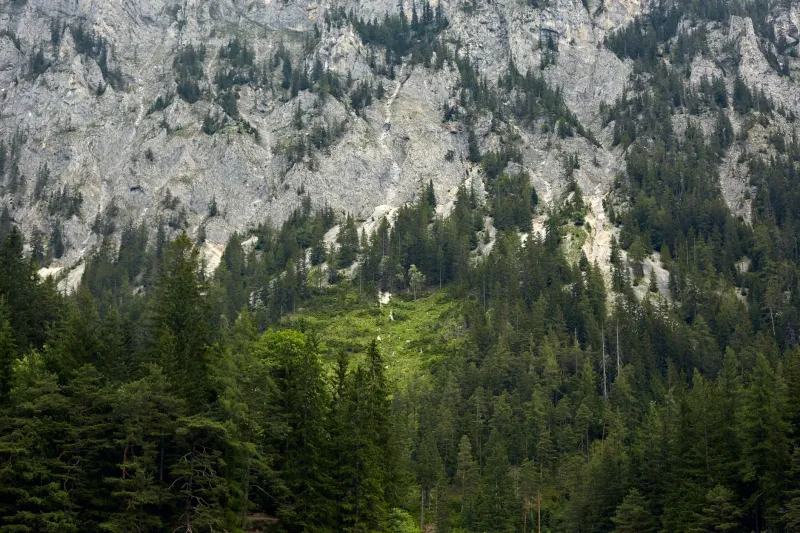
Grow up in the Alps and your relationship with patience isn't abstract. It's built into the seasons. Winters that shut roads for weeks. Summers that demand physical labor before anything else. Landscapes that are indifferent to your mood in a way that city environments simply aren't. You learn early that waiting is not the same as wasting time.
That lesson shows up on stage in ways that are almost unfair to performers trained elsewhere. An actor who grew up hiking through fog at 6,000 feet doesn't panic in a long pause. They've lived inside long pauses. They know how to let silence be inhabited rather than filled. In an entertainment culture that often mistakes volume for presence and speed for skill, this is a genuinely rare gift.
Voices trained in mountain communities also tend to carry differently — there's a resonance and grounding that comes from spending formative years in open air, in spaces where projection meant something physical rather than theatrical. It's not that these performers are louder. They're actually often quieter. But they land.
The Training Philosophy That Starts Before the Training
Many Central European conservatories — especially those rooted in the German-speaking tradition — build their acting curricula around something the rest of the world is only starting to understand: the body knows before the mind decides.
At institutions in Vienna, Munich, and Zurich, movement work often begins outdoors. Not as a gimmick, but as a foundational principle. The idea is that a performer who understands their body in relation to gravity, terrain, and weather has already done a version of the work that American programs spend semesters trying to teach indoors with studio mirrors.
Endurance is another thread that runs through this tradition. Not endurance as punishment, but as craft. Long rehearsal periods. Extended runs. The expectation that a role is something you grow into over months, not something you present on day one. Performers shaped by this philosophy tend to deepen rather than peak early — which makes them unusually valuable in long-running productions and serialized screen work, where so many American actors hit a ceiling and start repeating themselves.
The Casting Directors Who Are Paying Attention
Talk to anyone working in casting in New York theater right now and a pattern emerges. There's a growing appetite for performers who bring what one director described, somewhat helplessly, as "gravitational weight without heaviness." The kind of presence that doesn't need to announce itself.
What's interesting is that most of these casting conversations don't start with geography. Nobody's putting out a call for Swiss actors or Bavarian performers. But when the auditions happen and certain people walk in, the response in the room is consistent. Something registers. Something lands differently.
Some directors have started tracing it back. Asking questions. Finding that the performers who keep producing that response share certain biographical threads — mountain upbringings, multilingual childhoods, training in systems that emphasized patience and physical grounding over the kind of high-energy presentational work that American conservatories sometimes prize.
It's a correlation that the industry hasn't fully formalized yet, but it's there. And it's becoming harder to ignore.
Stillness as a Competitive Advantage
American entertainment has a complicated relationship with stillness. On one hand, the culture celebrates it when it sees it — think of the screen performances that haunt you, the stage moments that stop a room. On the other hand, the training pipeline tends to reward expressiveness, range, and the ability to fill a space quickly.
What Alpine-raised performers bring is a different understanding of what filling a space actually means. In a landscape where silence is the default and human presence is the exception, you learn to occupy space without crowding it. You learn that the mountain doesn't need you to perform for it. That lesson — that presence doesn't require performance — is exactly what so many American directors are hunting for and struggling to cultivate.
The Method, in its various American iterations, has always been chasing something similar. The idea that internal truth translates into external authenticity. But there's an argument — and it's being made quietly in rehearsal rooms from Chicago to Los Angeles — that some of what the Method tries to teach through technique, these performers absorbed through geography.
What This Means for the Story We Tell About Where Great Performers Come From
For a long time, the American entertainment narrative has been pretty self-contained. You train in New York or Los Angeles, you come up through certain programs, you work certain rooms, and the industry notices you. The pipeline was relatively predictable.
That's changing. Not dramatically, not overnight, but genuinely. Audiences are responding to something different, and the people who cast and direct are following that signal. The performers coming out of Central European backgrounds — carrying altitude in their posture and patience in their pauses — are disrupting a story the industry told itself for decades about where authority on stage comes from.
It doesn't come from volume. It doesn't come from speed. Sometimes it comes from a childhood where the mountain taught you, before any director ever could, that you don't have to rush to be heard.
And that's a lesson worth paying attention to.