Dressed to Become: The Quiet Power of Costume in Shaping a Performer's Soul

Dressed to Become: The Quiet Power of Costume in Shaping a Performer's Soul
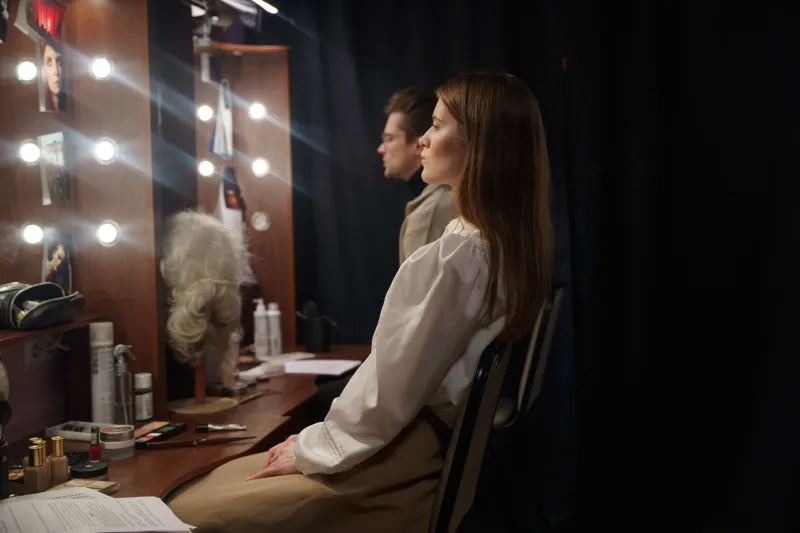
There's a moment that seasoned performers talk about in hushed, almost reverent tones. It doesn't happen under the lights. It doesn't happen in front of an audience. It happens in a small, usually cluttered fitting room somewhere backstage, when a costume designer slides a final garment onto a performer's body and something — quietly, unmistakably — shifts.
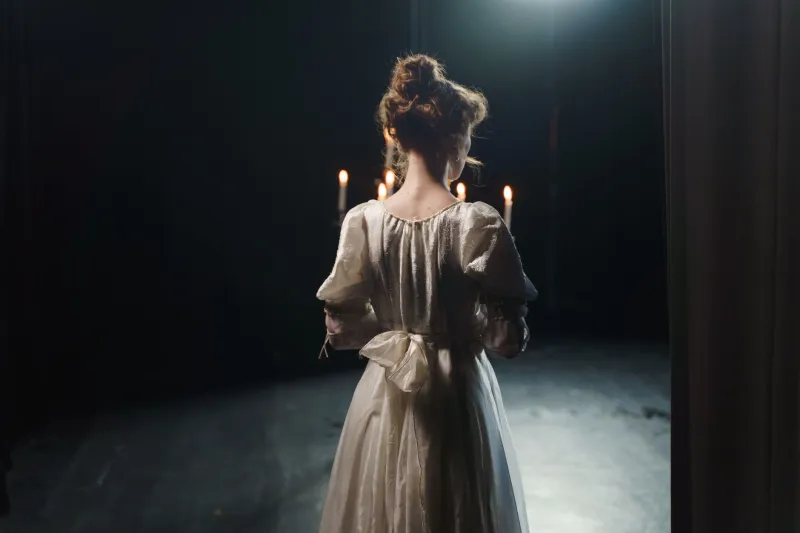
The character arrives.
In an era obsessed with digital spectacle, projection mapping, and stripped-down minimalist staging, it's easy to overlook the profound psychological machinery of a well-designed costume. But talk to anyone who has spent serious time in European opera houses or classical ballet companies — particularly in the German-speaking world, where theatrical craft is treated with near-scholarly seriousness — and you'll hear the same thing over and over: what a performer wears doesn't just change how the audience sees them. It fundamentally changes how the performer sees themselves.
The Fitting Room as Rehearsal Space
At major houses like the Wiener Staatsoper or the Bayerische Staatsoper in Munich, costume fittings aren't squeezed into lunch breaks or treated as logistical afterthoughts. They are scheduled with the same weight as a music rehearsal or a blocking session. Designers and performers work together for weeks, sometimes months, making incremental adjustments that might seem invisible from the third row but are felt immediately by the person wearing them.
This tradition has a practical logic behind it. A corset changes how you breathe, and how you breathe changes how you sing. A heavy skirt changes how you move through space. A pair of period-appropriate boots with a slightly elevated heel changes your posture, which changes your center of gravity, which changes everything about how a character holds themselves in the world.
Costume designer Elke Brandner, who has worked across opera and theater productions in both Europe and the United States, describes the process as "building a body from the outside in." She puts it simply: "I'm not decorating someone. I'm handing them a physical argument for who this person is."
The Moment It Clicks
Ask performers to pinpoint the moment a role truly clicked, and a surprising number of them will point not to a director's note or a script revelation, but to something they put on.
One American soprano who trained in Germany recalls the exact fitting where her interpretation of a particular Strauss role crystallized. The costume team had been working with a heavier, more elaborate gown for weeks. Then, almost on a whim, the head designer brought in something simpler — a darker, more austere silhouette with a single ornate brooch at the collar. "The moment I looked in the mirror, I stopped feeling like I was playing a tragic figure and started feeling like I was one," she says. "The brooch was the thing. It felt like inherited grief. I don't know how else to explain it."
This kind of story isn't unusual. Ballet dancers frequently cite the weight and cut of a tutu as something that reorganizes their relationship to gravity mid-rehearsal. Character actors in theater talk about how a specific hat — the angle of it, the material, the way it sits — can unlock a voice they hadn't found through weeks of text work alone.
The psychology here isn't mystical, even if it sometimes feels that way. Embodied cognition — the idea that our physical sensations directly shape our mental and emotional states — has solid scientific grounding. When you put on a costume, you're not just changing your appearance. You're changing your proprioception, your movement patterns, and in turn, your internal emotional landscape.
What American Theater Is Still Learning
In the U.S., particularly in commercial theater and film, costume is often treated as one of the final pieces dropped into place — something that gets finalized after the "real" creative work is done. Budget pressures, tight timelines, and the dominance of director-driven vision can push costume designers into a reactive rather than collaborative role.
The Central European model flips this. Costume enters the conversation at the same time as set design, music, and dramaturgy. The garment is understood as a dramaturgical tool, not a finishing touch.
Broadway has been slowly catching up. High-profile productions in recent years — particularly those with European directors at the helm — have started treating the fitting process with more intentionality. And American film productions shooting in Europe have noted, sometimes with surprise, how much more time is built into the schedule for costume collaboration.
But the shift is gradual. And in the meantime, a generation of American performers is moving through productions without fully experiencing what it feels like to become a character from the skin outward.
The Accessory That Carries the Story
If full costumes are the architecture of a character, accessories are the details that make a house a home. A prop ring worn throughout rehearsals. A specific pair of gloves. The weight of a pocket watch. These small objects accumulate meaning in a performer's nervous system in ways that are hard to articulate but impossible to ignore once you've experienced them.
In Central European theatrical tradition, accessories are often introduced early in the rehearsal process precisely for this reason. A performer who has been carrying a particular walking cane for three weeks doesn't need to act "old" or "powerful" — they simply move with it. The object has done its work.
This is the quiet genius of great costume design: it removes the need for performance to be entirely internal. The external world meets the performer halfway.
Why It Matters Now More Than Ever
As live performance continues to compete with the infinite scroll of streaming content, one of its most powerful differentiators is the irreducibly physical nature of what happens on stage. Bodies in space. Fabric catching light. The specific weight of a crown on someone's head.
Digital effects can create spectacle. Projections can transform a set in seconds. But no algorithm has yet figured out how to replicate the moment a performer puts on a coat and becomes someone else entirely.
For audiences, this is part of what makes live theater and opera feel different from anything a screen can offer — even if they can't always name why. What they're responding to, at least in part, is the truth that a well-designed costume carries. The character's history. Their class, their grief, their vanity, their hope — all of it woven into the cut of a sleeve or the heel of a boot.
The fitting room, it turns out, is one of the most important stages in the entire process. It just doesn't have an audience.
Until opening night.