Eyes Wide Open: What Performers Gain When They Stop Being the One Onstage
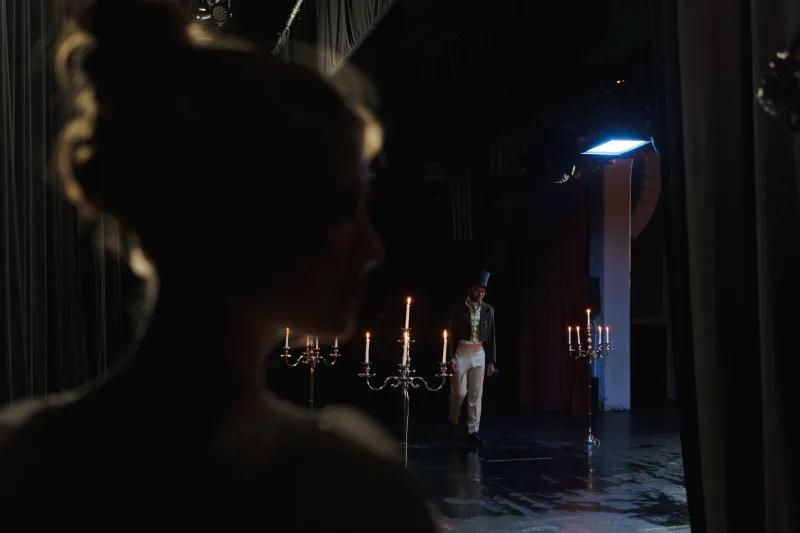
Somewhere between the first rehearsal and opening night, most performers develop a kind of tunnel vision. They're laser-focused on their own lines, their own blocking, their own emotional arc. Which makes sense. That's the job, right?
Except it isn't. Not entirely.
The performers who build long, adaptable careers — the ones who can walk into a room cold and read it instantly, who can pivot mid-scene without losing a beat — they've usually spent serious time in a different mode. Not performing. Watching.
The Notebook Nobody Talks About
In many European repertory companies, younger company members are routinely expected to observe rehearsals for productions they aren't cast in. Not as a punishment. Not as a scheduling convenience. As training. There's even a loose tradition in German-speaking theater culture — the kind that shapes the artistic DNA of a place like the Burgtheater in Vienna — of keeping what you might call a Beobachtungsheft, an observation notebook. A place to record what you notice when you're not the one being noticed.
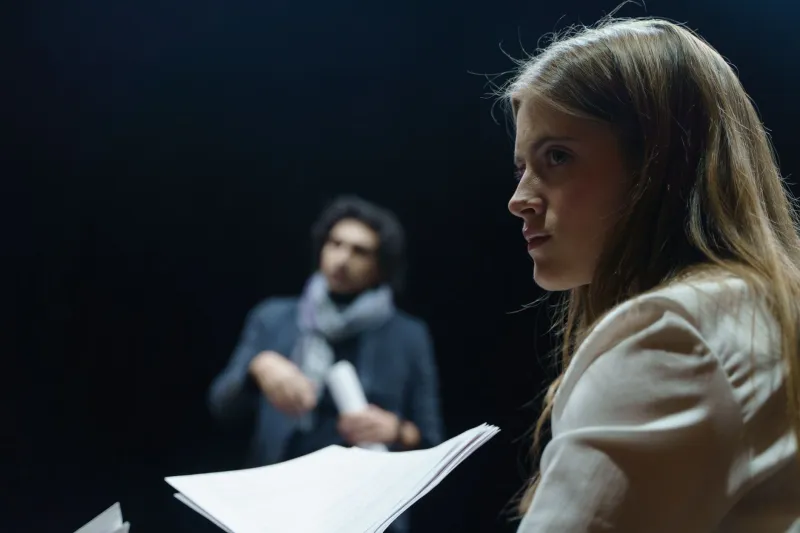
It's a simple concept with surprisingly deep implications. When you're not worried about your own performance, your brain shifts gears. You start noticing the space between lines. You clock the moment a scene changes temperature before anyone can explain why. You watch a director give a note and suddenly understand something about your own work that three weeks of personal feedback never quite landed.
American performers, by contrast, tend to treat observation as passive. You watch when you're not needed. You check your phone when you're offstage. You run lines in your head while other people are doing the scene. The idea that watching could be an active, intentional skill — one worth practicing with the same rigor as voice work or movement — rarely comes up in U.S. conservatory training.
What You Actually Learn by Watching
Let's get specific, because this isn't just philosophical.
Rhythm and tempo. When you're in a scene, you're managing your own internal clock. When you're watching, you hear the whole orchestra. You start to understand how a scene breathes — where it speeds up, where it needs to slow down, why a particular pause lands as pregnant rather than just empty. That knowledge doesn't live in a textbook. It lives in your body after you've watched enough scenes with full attention.
Physical vocabulary. Every experienced performer carries a library of physical choices — a way of crossing the stage, a gesture that communicates without words, a stillness that reads from the back row. You don't build that library by doing. You build it by watching other people do, then filing it away. The best character actors in the business will tell you that half their toolkit came from observing people who had nothing to do with theater at all.
Empathy as a technical skill. This one sounds soft, but it's genuinely mechanical. When you watch a scene from the outside, you're forced to track multiple characters simultaneously. You see how one performer's choice affects another's reaction. You develop a kind of spatial empathy — an instinct for where everyone is emotionally at any given moment. That instinct is what makes a performer easy to act with, which, if you ask any casting director, is almost as valuable as talent.
Directorial thinking. Performers who've done serious observation work start to understand what directors are actually solving for. They stop taking notes personally and start seeing them as structural adjustments. That shift alone can transform a professional relationship.
How to Build This Practice Without an Understudy Contract
You don't need to be understudying a lead role to develop an observer's eye. Here are a few ways American performers can build this into their regular practice.
Go to theater as a student, not an audience member. Pick one production per month and attend with a notebook. Not to review it — to dissect it. Write down three specific moments that surprised you and try to articulate why they worked.
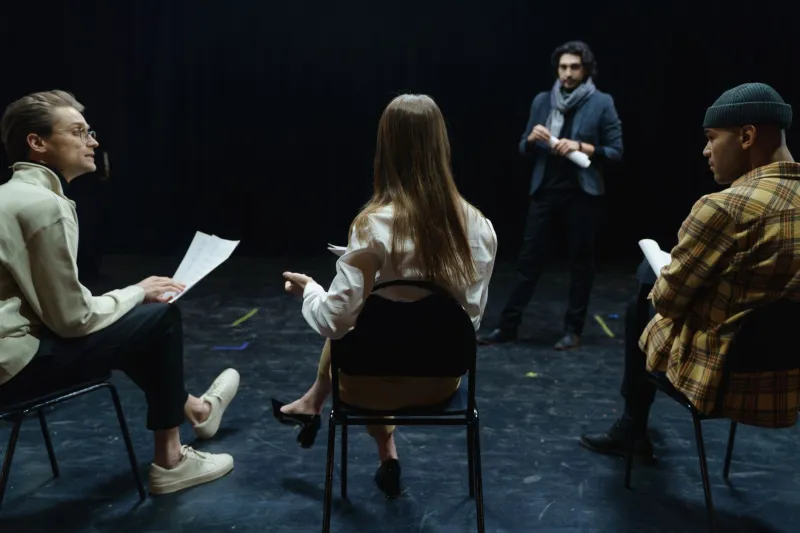
Watch rehearsals whenever you can get access. Community theaters, university productions, workshop showings — many of these are open if you simply ask. Position yourself as someone who wants to learn. Most directors are flattered.
Study film with the sound off. This is an old trick, but it works. Watching a scene without dialogue forces you to read physical performance in isolation. You'll start catching things you'd never notice with full audio.
Observe people, not just performers. Sit in a coffee shop. Watch a difficult conversation happening two tables over. Notice how the person listening changes their posture before they respond. Real human behavior is the most instructive rehearsal room there is.
The Ego Problem
Here's the uncomfortable part. A lot of performers resist deep observation because watching feels like losing. In a culture that equates visibility with value, spending time in the wings can feel like falling behind. Especially in the American market, where hustle is the primary virtue and being seen is treated as the whole point.
But the performers who last — the ones who are still working with genuine interest and range twenty years in — almost universally describe a period in their development when they got quiet and got curious. When they stopped trying to be the most interesting person in the room and started trying to understand what made other people interesting.
That shift doesn't make you less ambitious. It makes you more precise. And precision, in this business, is what separates a performer who's good for one kind of role from one who can do almost anything.
Your notebook is waiting. Open it.