Wear the Role Before It's Yours: What Understudies Know About Mastery That Stars Often Forget
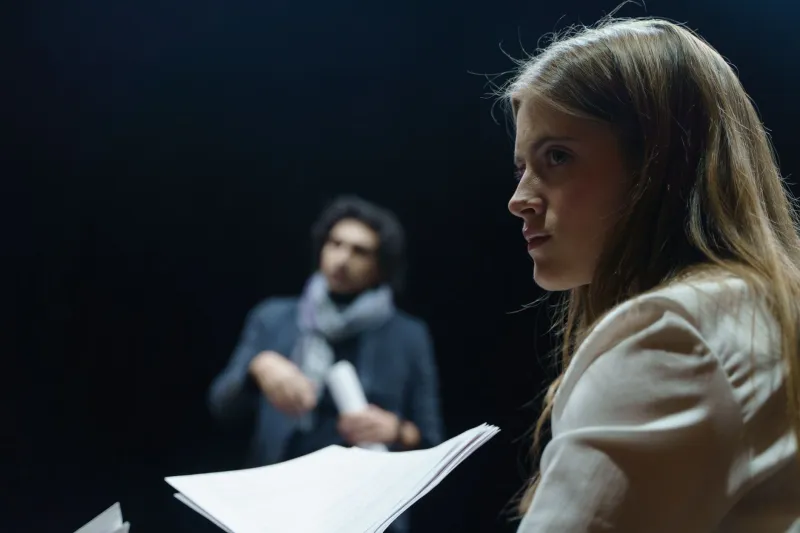
There's a moment every understudy knows. You're standing in the wings, watching the principal actor hit a beat you've rehearsed a hundred times in your head — a tilt of the chin, a half-second of stillness before the line lands — and you think: I would have done it differently. And then, almost immediately: But would mine have been better?
That question is the whole thing. That tension is where the real education lives.
In the American theater world, understudying often gets treated as a waiting game. You learn the blocking, you mark the scenes, you stay ready. But in many European theatrical traditions — particularly in German-speaking repertory houses, where a company might run fifteen productions simultaneously with rotating casts — the understudy role is treated with a different kind of seriousness. It's not a backup plan. It's a masterclass.
Two Systems, Two Philosophies
The difference starts at the structural level. American Broadway and regional theater tend to cast understudies after the principal actor is already locked in, often late in the rehearsal process. The understudy inherits a finished performance and is asked to replicate it faithfully enough to go on without disrupting the show.
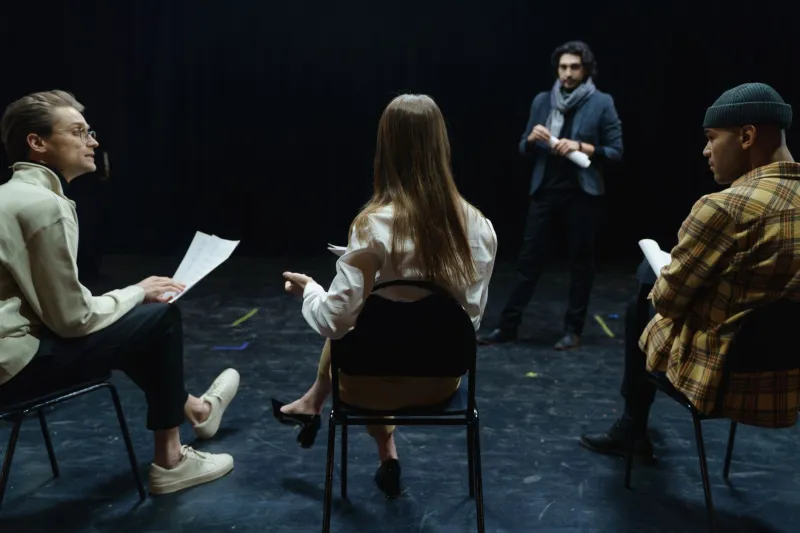
In German repertory theater — the Stadttheater model, where ensembles perform year-round and actors rotate through roles — the understudy is more often a full ensemble member learning the role from scratch alongside the principal, sometimes in separate understudy rehearsals with the director. They're not copying. They're constructing.
That's a meaningful distinction. When you copy, you're working from the outside in. When you construct, you're building from the same raw materials — the text, the relationships, the given circumstances — and arriving at your own architecture. The fact that someone else is performing the role eight times a week doesn't diminish your ownership of it. In some ways, it sharpens it.
The Strange Gift of Constraint
Here's the counterintuitive part: learning someone else's role in detail — their specific timing, their physical choices, the way they handle a particular emotional turn — doesn't box you in. It expands you.
Think about it like learning a piece of music. A young pianist who studies five different recordings of the same Beethoven sonata doesn't come away confused about how to play it. They come away with a richer sense of the possibilities inside it. They understand where the phrase can breathe, where it can press forward, where it can hold back. They've heard five different answers to the same question, and that gives them something to argue with — which is exactly how interpretation develops.
Watching a skilled actor work the same scene night after night teaches you something no amount of solo preparation can: you learn where the role lives. You see which choices are structural and which are personal. You start to understand the difference between what the text demands and what the performer brings.
And then, when it's your turn — even if your turn only comes because someone pulled a hamstring on a Tuesday — you step into something you genuinely know. Not a facsimile. A fully inhabited understanding.
Humility as a Technical Skill
There's another layer here that doesn't get talked about enough, and it's the ego piece.
American performance culture, particularly in the commercial theater and film world, puts enormous weight on originality. The goal is always to bring your thing, your voice, your interpretation. That's not wrong — originality matters. But it can create a blind spot where actors resist studying anyone else's work too closely, as if influence were a form of contamination.
European conservatory training tends to push back on that instinct. Students at schools like the Ernst Busch Academy in Berlin or the Mozarteum in Salzburg spend significant time analyzing other actors' performances — not to imitate them, but to understand the craft underneath. The assumption is that mastery comes from deep study, not just from personal expression.
Learning an understudy role rigorously requires a specific kind of humility: the willingness to sit with someone else's choices long enough to understand why they work, even when yours might be different. That's not weakness. That's intellectual discipline. And it's genuinely hard.
What Gets Added to Your Toolkit
Practical performers who've done serious understudy work — the kind where you're actually in the room, not just reading the script at home — tend to talk about the experience the same way. They say they came away with new options.
A comedic actress who understudied a role built on slow, deliberate physical comedy found herself using that timing in a completely different production two years later. A dramatic actor who spent a season watching a more experienced colleague handle grief onstage said it changed how he thought about stillness. Not because he copied the performance, but because watching it closely gave him a new question to ask himself: What happens if I don't move here?
That's the gift. The understudy role becomes a lens. It teaches you to look at performance from the outside and the inside simultaneously — which is, incidentally, exactly what directors and acting coaches spend years trying to get performers to do.
A Different Kind of Opening Night
There's something almost mythological about the understudy who goes on at the last minute and delivers something extraordinary. Broadway has its legends — the covers who stepped in and stopped the show, who got the call at 6 PM and were taking bows by 11. We love those stories because they feel like proof of something: preparation meeting opportunity, craft meeting courage.
But the deeper story is the one that happens in the months before. The hours of watching, marking, questioning, building. The private rehearsals in an empty studio. The performance that exists fully formed in one person's body and mind, waiting for a stage that may never come.
That version of the story is less cinematic. But it might be the more honest one. Because mastery — real mastery — doesn't start with the spotlight. It starts with the willingness to learn something completely, even when no one's watching.
And if you're lucky, the role you learn in someone else's shadow turns out to be the one that teaches you the most about your own.