The Empty Stage Is Still a Stage: How Smart Performers Keep Their Craft Alive When the Work Goes Quiet
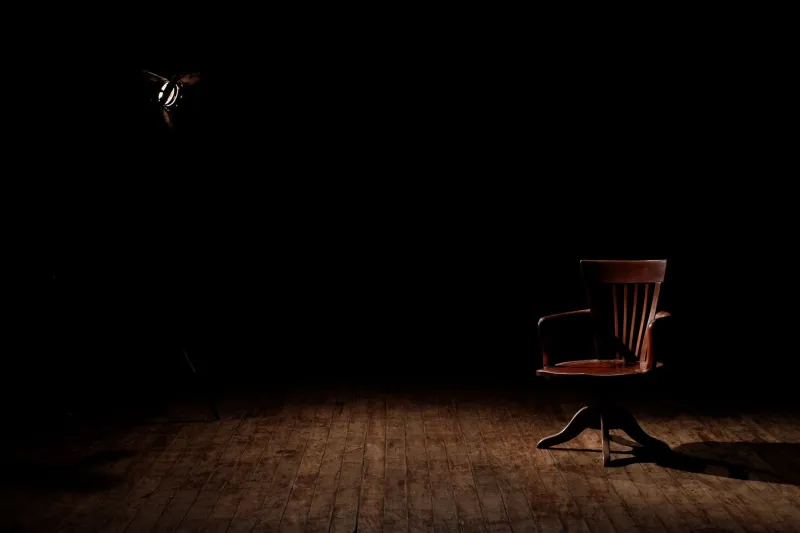
In theater, there's a tradition called the ghost light. When the last person leaves the building, a single bulb on a tall stand gets wheeled out to the center of the stage and left burning through the night. The practical reason is safety — so no one walks into the dark and falls into the orchestra pit. But performers have always attached something more to it. The light means the stage isn't empty. Something is still alive in there.
I think about that image a lot when I think about what happens to performers between gigs.
Because here's the reality of a freelance acting career in America: you are, for significant stretches of time, not performing. You're auditioning, or you're waiting to hear back, or you just closed a show and the next one hasn't materialized yet. The industry has seasons and cycles, and unless you're one of a very small number of people with year-round contracts, there are gaps. Sometimes long ones.
What you do in those gaps is, I'd argue, more defining than what you do onstage.
The European Model Nobody Talks About
In German-speaking theater culture — which has a long tradition of ensemble companies with full-season contracts — this particular problem is partly structural. If you're a member of a Stadttheater ensemble, you're employed year-round. You're in rehearsals, or in performance, or in workshops. The instrument stays warm because the institution keeps it warm.
American freelance performers don't have that infrastructure. Which means the discipline has to come from somewhere else. It has to be internal.
This is where European conservatory training has something genuinely useful to offer — not the institutional structure, but the habit of practice it instills. Students at serious European drama schools are trained to treat their instrument the way a musician treats theirs: as something that requires daily maintenance, not just activation when a job arrives.
A violinist doesn't stop playing between concerts. A dancer doesn't stop stretching between rehearsals. And yet it's surprisingly common for actors — especially in the American freelance world — to essentially go dormant between productions. The logic goes: I'll get back into it when I have something to work toward. Which sounds reasonable until you realize that's exactly when you should already be in shape.
What Ritual Actually Does
Let's talk about what we mean by ritual, because the word can sound more mystical than it needs to.
A ritual, in this context, is just a repeated practice that signals to your nervous system: this is what we do here. It's the vocal warmup you do every morning before you've had coffee. It's the ten minutes of physical centering before you sit down to read a script. It's the journal entry you write after watching a performance — not a review, just an honest account of what you noticed and what it made you feel.
These things sound small. They are small. That's the point.
The research on habit formation — and there's a lot of it — consistently shows that small, repeated behaviors compound over time in ways that large, irregular efforts don't. A thirty-minute daily vocal practice over six months does more for your instrument than a week of intensive prep right before auditions. The body learns through repetition, not intensity.
But there's something beyond the technical argument. Ritual also maintains your relationship to the work. It keeps the craft from feeling like a foreign country you only visit occasionally. When you practice consistently — even quietly, even alone — you stay in conversation with what you're doing. And that conversation is where the real development happens.
Specific Practices That Actually Work
So what does this look like in practice? Not prescriptively — every performer's instrument is different — but here are a few approaches that show up consistently among working artists who maintain their craft through the slow seasons.
Daily voice work, even fifteen minutes. Sirens, resonance exercises, text work spoken aloud. The voice is the first thing to go when it's not being used, and the last thing that feels like itself again when you come back to it cold.
Character journaling — picking a role you've played, or one you want to play, and writing in that character's voice. Not for any production, just for the practice of inhabiting a perspective that isn't yours. This sounds like an acting school exercise because it is one. It also works.
Solo scene work, performed to no one. Pick a monologue, a scene from a play you love, a speech you've never had occasion to perform. Work it seriously. Set a space, set conditions, do it fully. The absence of an audience doesn't make it less real — it makes it purer.
Intentional observation — watching performances (live theater, film, whatever's accessible) with a specific question in mind. Not passive consumption, but directed attention. What is this person doing with silence? How are they handling the transition between emotional states? What would I do differently, and why?
The Psychological Argument
Beyond craft maintenance, there's a mental health dimension to this that performers don't always want to talk about openly.
The off-season can be destabilizing in ways that have nothing to do with finances. When your identity is deeply tied to your work — and for most serious performers, it is — the absence of that work creates a kind of low-grade disorientation. You don't know quite who you are when you're not doing the thing that makes you feel most like yourself.
Ritual helps with that. Not because it solves the problem, but because it maintains a thread back to the work even when the work isn't present. The daily practice says: I am still this person, even today when no one is watching and nothing is at stake. That continuity matters more than it sounds.
The ghost light doesn't perform. It doesn't rehearse. It just stays on — a small, consistent presence that says the stage is still alive, still waiting, still ready.
That's all a ritual has to do. Stay on. Keep the light burning. The rest follows.