The American Stage Is Finally Shutting Up — and It's About Time
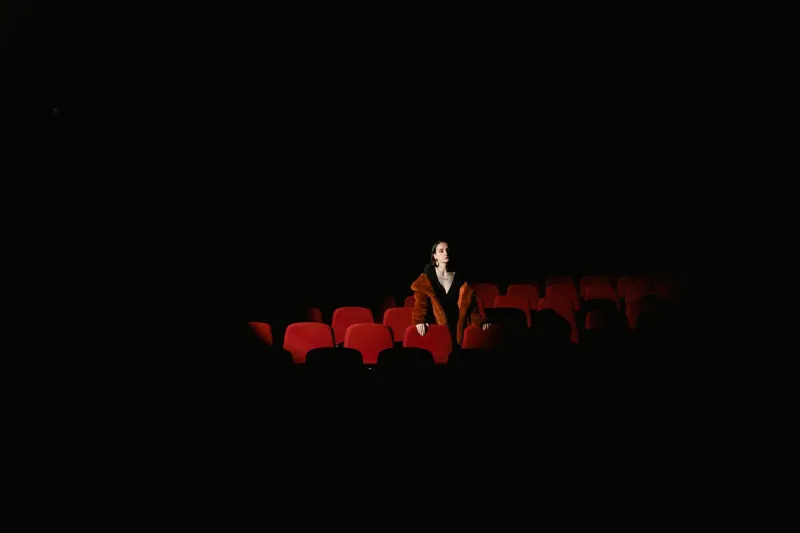
I want to tell you about a moment in a production I caught off-Broadway a couple of seasons back. The lead actor had just received devastating news — the kind of scene where you'd expect an immediate emotional eruption, the sort of response that wins awards and gets quoted in reviews. Instead, he stood completely still for what felt like an uncomfortably long time. No music swelled. No reaction shot cut away. Just a person, a stage, and silence.
The audience didn't fidget. They leaned in.
That's the thing about silence when it's used deliberately: it doesn't feel like absence. It feels like pressure. And American directors — slowly, sometimes reluctantly — are starting to figure that out.
We Were Afraid of the Quiet
For most of American entertainment history, silence was the enemy. Network television trained audiences to expect constant stimulation. Hollywood blockbusters scored every scene within an inch of its life. Even prestige theater tended to fill negative space with business — a prop adjustment here, a meaningful look there — anything to signal that something was happening.
This wasn't laziness. It was a genuine philosophical position: that entertainment must continuously earn its audience's attention through activity. Leave too much room, the thinking went, and you lose them.
The problem is that this approach fundamentally misunderstands how attention works. Constant stimulation doesn't hold attention — it exhausts it. And exhausted audiences don't feel things deeply. They just feel tired.
What Europe Has Been Doing Differently
The European theatrical tradition — particularly in the German-speaking world, but also in Scandinavia, France, and the UK's more adventurous corners — has long treated silence as a compositional element rather than a gap to be filled. Directors like Peter Brook, Thomas Ostermeier, and the late Peter Zadek built entire aesthetic philosophies around the idea that what a performer doesn't do can be more powerful than anything scripted.
In this tradition, a pause isn't a mistake. It's a question mark hanging in the air. It's an invitation for the audience to participate — to bring their own experience into the space the performer has deliberately left open.
Ostermeier's productions, in particular, have toured American cities enough times that their influence is now measurable. Directors who've seen his work describe a kind of recalibration — a sudden awareness of how much they'd been over-filling their own productions, how much trust they'd been withholding from their audiences.
The Productions That Prove It Works
The shift is visible if you know where to look. Several American productions in recent years have made stillness a deliberate directorial choice — and audiences have responded in ways that complicate the old assumption that Americans need constant forward momentum to stay engaged.
Lynn Nottage's work, in productions where directors have been willing to hold a moment rather than rush through it, consistently demonstrates that American audiences can sit with discomfort when they trust the production to hold them there. The same is true of certain film productions — the quieter moments in recent prestige dramas have generated as much critical conversation as the big set pieces, often more.
What's notable is that this isn't just a theater phenomenon. Film directors with stage backgrounds — or those who've worked extensively in European co-productions — are bringing the same sensibility to screen work. The result is a different kind of performance: less demonstrative, more interior, and paradoxically more watchable.
Why American Audiences Are Ready
Here's the argument I'd make: American audiences have changed, and the industry is only now catching up.
Streaming culture, for all its faults, has done something interesting to viewer tolerance for slow storytelling. Shows like The Bear, Succession, and Slow Horses — all of which use silence and stillness as deliberate tools — have performed extraordinarily well with American viewers who supposedly can't handle anything that doesn't move at pace. Clearly, that assumption was wrong.
Audiences aren't impatient with silence. They're impatient with purposeless silence. The distinction matters enormously. A pause that means something — that's been earned by the scene and executed with precision — doesn't read as dead air. It reads as depth.
That's the European lesson that's finally landing on American shores: the director's job isn't to fill the stage. It's to curate what belongs there, and to have the confidence to leave everything else out.
The Resistance That Remains
None of this is happening without friction. Commercial theater, in particular, still operates under significant pressure to deliver entertainment that moves — that justifies the ticket price through constant activity. Producers get nervous. Investors get nervous. And there's always someone in the room ready to suggest that a scene needs "a little more energy."
But the directors who've committed to this approach tend to be stubborn about it in the best way. They've seen what happens when a room full of people is held in genuine stillness, and they're not willing to trade that experience for safety.
The Quiet Revolution
What we're watching, if we're paying attention, is a quiet revolution in American directorial philosophy. Not a rejection of American storytelling energy — that urgency and directness is genuinely valuable — but a willingness to let European ideas about restraint and patience expand the vocabulary.
The best American directors working right now aren't choosing between noise and silence. They're learning to use both with equal intentionality. They're discovering that an audience that has been held in stillness for thirty seconds will receive the next line of dialogue with an attention they simply couldn't have offered otherwise.
Silence, it turns out, isn't what happens when the story stops. It's sometimes where the story actually lives.