What the Mountain Teaches: How Alpine Roots Rewire a Performer's Relationship with Setback
There's a specific kind of quiet that happens when a casting director's email doesn't come. Every performer knows it. The waiting room of the soul — that dead stretch between audition and answer where the mind starts doing its worst work. In American show business, that silence is often treated as a verdict. As failure. As proof of something.
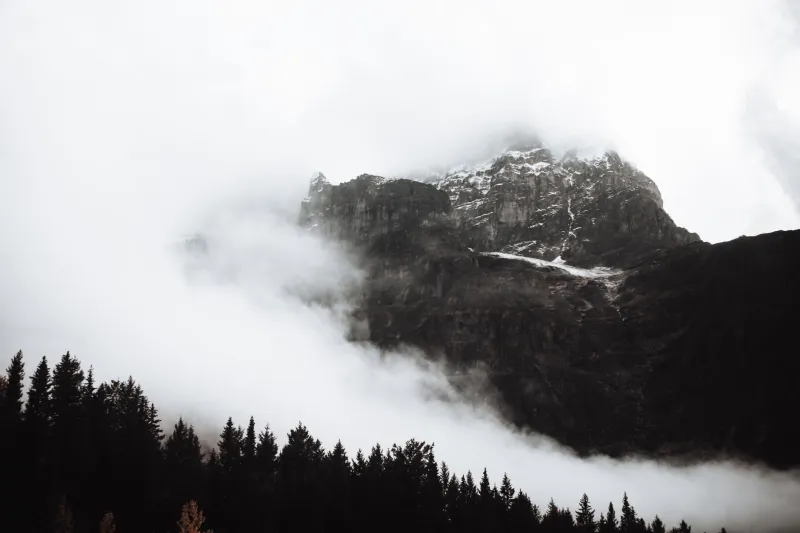
But ask a performer who grew up in the Austrian Tyrol, in a Swiss valley, or in a small Bavarian town tucked between peaks that block the sun for half the year, and they'll tell you something different. They'll tell you the silence is just winter. And winter always ends.
Geography as Teacher
This isn't romanticism. It's psychology — and it's rooted in something very real about what it means to grow up in a landscape that doesn't negotiate.
The Alps are indifferent. They don't reward effort with success. A storm rolls in regardless of how hard you worked that season. A trail closes because the mountain decides, not because you weren't ready. People who are raised in these environments — particularly those in rural communities where the rhythms of the natural world still shape daily life — develop what psychologists sometimes call hardiness: a cognitive framework that separates effort from outcome and finds meaning in the attempt itself.
For performers, that distinction is everything.
"In America, I noticed very quickly that people treat a 'no' like an ending," says one Austrian-born stage actress who has worked extensively in both Vienna's Burgtheater circuit and off-Broadway productions in New York. "Where I grew up, you don't stop hiking because the weather turns. You adjust. You find shelter. You go again tomorrow. I think I brought that with me without even knowing it."
The Failure Script
American entertainment culture has a complicated relationship with failure. On one hand, it loves a comeback story — the redemption arc is practically its own genre. On the other, the industry operates on a model of relentless forward momentum where stalling, stumbling, or disappearing from the radar even briefly can feel catastrophic to a career.
This creates a particular kind of performer: one who is brilliant at projecting confidence and deeply terrified of the pause. The hustle becomes armor. And armor, as any good acting teacher will tell you, is the enemy of truth onstage.
Contrast that with the theatrical culture that produces many Alpine performers. European conservatory training — particularly in German-speaking countries — tends to treat failure as curriculum. Mistakes in rehearsal aren't embarrassments to recover from; they're data to examine. Directors in the German-speaking tradition are often known for slowing down precisely when something goes wrong, treating the breakdown as the most interesting part of the process.
"We had a director at my conservatory who used to say, 'The moment it falls apart is the moment we start learning,'" recalls one performer with roots in the Vorarlberg region of western Austria, now based in Chicago. "I didn't understand it fully then. But every time I've hit a wall in my career — and there have been walls — I hear that voice."
When Rejection Doesn't Define You
The practical result of this mindset shows up in career longevity. Performers who treat rejection as information rather than identity tend to keep going longer, take more creative risks, and build bodies of work that deepen over time rather than peak early and collapse.
It also shows up in audition rooms. There's a quality that casting directors in New York and Los Angeles often describe in performers from European theatrical backgrounds — a kind of groundedness, an absence of desperation — that reads as confidence but is actually something more nuanced. It's the quality of someone who genuinely believes the work is worth doing regardless of whether this particular door opens.
That's not detachment. It's durability.
What American Performers Can Actually Take From This
None of this means you need to have grown up in a mountain village to develop a healthier relationship with setback. But it does suggest that the cultural story we tell performers in America — that every "no" is a crisis and every pause in momentum is failure — might be doing real damage.
The Alpine model, at its core, asks a simple question: What would you do if the outcome were guaranteed to be uncertain? Would you still show up? Would you still do the work?
For the performers who answer yes — who have internalized that the practice itself is the point — rejection stops being an ending. It becomes, as one Austrian actress put it with a small smile, "just weather."
And they dress for it. And they go again tomorrow.