Opening Night Was Always the Deadline — Now It's the Only Date That Matters
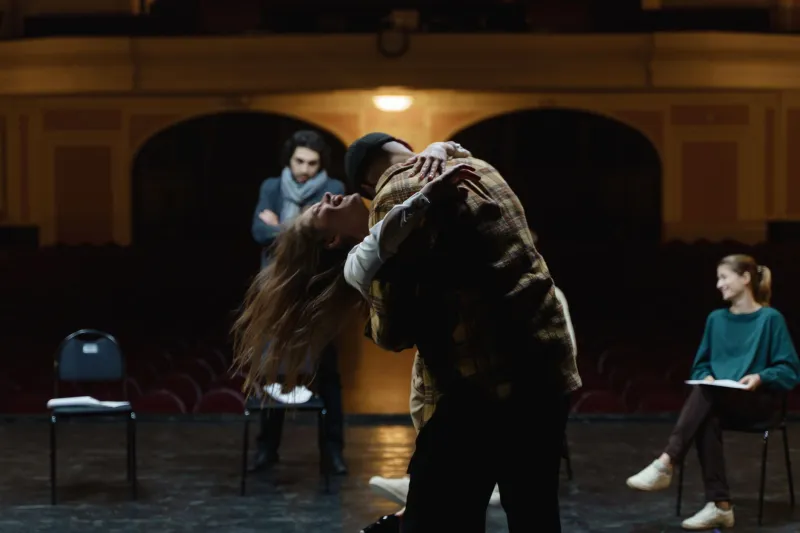
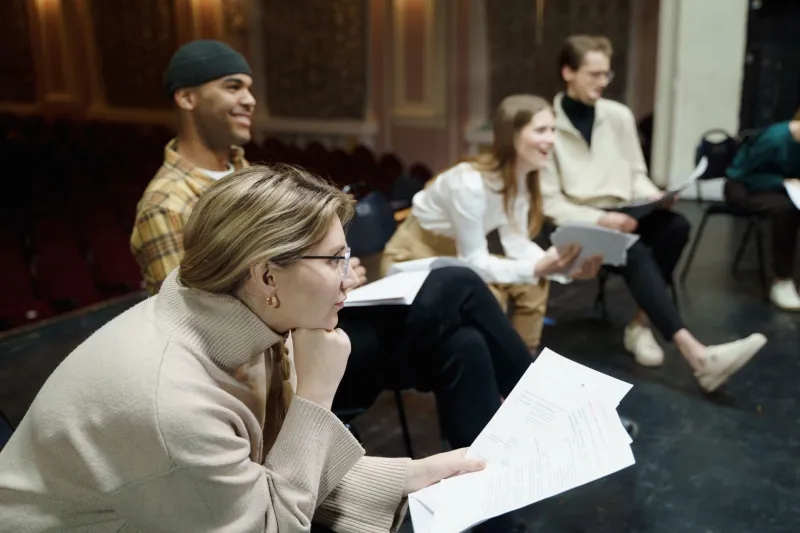
In a rehearsal room somewhere in Vienna, a cast is in its fifth week of working on a play that won't open for another three. The director has just thrown out a scene they spent two days building. Nobody panics. The stage manager doesn't flag a budget concern. The conversation moves to what the scene was trying to do and why it didn't get there. They'll try something else tomorrow.
In a rehearsal room somewhere in midtown Manhattan, a cast is in its third week of working on a musical that opens in five. The choreographer is behind. The book writer is still revising. The producers are looking at preview ticket sales. The director is getting notes from people who haven't seen a run-through. The conversation is about which scenes can be cut.
These aren't hypothetical scenarios. They're composites drawn from the experiences of performers who've worked in both systems — and the contrast they describe is not subtle.
The Numbers, First
Broadway's standard rehearsal period for a new musical runs roughly four to five weeks before previews begin. Add the preview period — during which the show is technically open and audiences are paying full price — and you have a production that may be fundamentally reworked while it is simultaneously a commercial product. Straight plays tend to move faster. Revivals faster still.
In Germany, Austria, and much of Scandinavia, ensemble-based repertory theaters routinely allocate eight to twelve weeks for major new productions. Some experimental companies take longer. The rehearsal period is understood as the time when the actual artistic work happens — not a prelude to the work, not a warm-up for the work, but the work itself.
The difference isn't just time. It's what that time is understood to be for.
What Gets Lost When the Clock Runs Fast
Ask performers who've trained or worked extensively in European theater systems what they miss most when they come back to American productions, and you'll hear variations on the same answer: the right to be wrong for a while.
In an extended rehearsal room, failure is a research tool. You try a scene ten different ways because you have the time to try a scene ten different ways. You discover what the play is actually about by going down roads that turn out to be dead ends. The dead ends aren't wasted time — they're the process by which a company of people develop a shared understanding of what they're making.
Compress that process into three weeks and something changes. Choices that would have been discarded after exploration get locked in because there isn't time to discard them. Instincts that might have deepened into something complex get frozen at their surface level. The show that opens is the show that survived the schedule, which is not always the same as the show that could have been.
"There's a version of every role I've played on Broadway that I never got to meet," one performer told me — a woman who has worked extensively in both Germany and New York. "You can feel it sometimes, in previews, when something starts to open up and then you open and it has to stop opening because now it has to be consistent. In Europe, that opening-up period is the whole point. Here, it's almost an accident."
The Preview Problem
The Broadway preview system deserves its own examination. In theory, previews allow a production to refine itself in front of live audiences before the press arrives and the reviews land. In practice, previews have become a hybrid commercial-artistic product that serves neither function particularly well.
Audiences pay premium prices to see shows that are still being fixed. Performers are asked to deliver consistent, reviewable work while simultaneously absorbing new pages, new staging, and new notes after every performance. The psychological whiplash of that is real — and it's a specific kind of pressure that doesn't exist in the same form anywhere in European theater.
Several transatlantic performers described the preview period as the most stressful part of any Broadway production — not because of the audience, but because of the competing demands. "You're supposed to be fully in the show," said one actor who has worked in both London's West End and on Broadway. "But you also have a three-page rewrite in your dressing room that goes in tomorrow night. You can't fully commit to what exists because what exists is still being negotiated."
What the European Model Actually Looks Like in Practice
It would be easy to romanticize the European rehearsal room as some kind of artistic paradise where time is infinite and money is no object. That's not accurate. European state-subsidized theaters operate under their own constraints, their own politics, their own institutional pressures.
But the subsidy model does change the fundamental calculus. When a theater's operating budget doesn't depend on a single production recouping its investment through ticket sales in a specific window, the timeline decisions become artistic rather than financial by default. Directors have the authority to say "we need more time" without triggering a financial crisis. Casts have the space to develop material slowly without that slowness being coded as a budget problem.
The results aren't always better — European theater has its own share of overlong, self-indulgent productions that needed someone to move things along. But the process produces something different in performers: a deeper acquaintance with the material, a more layered understanding of their characters, and a kind of physical ease in the role that takes time to develop and cannot be manufactured by sheer effort alone.
Five Things American Productions Could Actually Do Differently
This isn't an argument for tearing down the Broadway model. It's an argument for selective borrowing — taking specific practices that are working elsewhere and seeing what they might offer here.
1. Protected early rehearsal time. The first week of rehearsal should be genuinely exploratory, with no pressure to produce stageable material. European companies often treat the first ten days as a research period.
2. Fewer producers in the room. Multiple performers cited the presence of producers in rehearsal — people with financial stakes but no artistic role — as a significant source of pressure that compresses creative risk-taking.
3. Longer previews with genuine flexibility. If previews are going to function as a refinement period, the production needs to be willing to make significant structural changes — not just cut a song or adjust a lighting cue.
4. Post-opening development periods. Some European repertory productions continue to evolve months into their runs, with occasional rehearsal periods scheduled after opening. The idea that a show is "finished" on press night is a commercial convention, not an artistic one.
5. Honest conversations about what compression costs. The industry knows that shorter rehearsal periods affect the work. That knowledge tends to stay in dressing rooms and greenrooms. Bringing it into more public conversations — the way this piece is trying to do — is a start.
The Audience's Share of This
Here's the part that's easy to forget: when rehearsal time shrinks, audiences lose something too. They just don't know what they're missing because they never saw the alternative.
They see the show that made it through the schedule. They don't see the show that might have existed with three more weeks and the freedom to fail productively. They don't see the character depth that develops in week seven of rehearsal, or the ensemble chemistry that only coheres after a company has spent real time together in the material.
Opening night was always the deadline. The question is whether it's the only thing the process is built around — and whether the work that happens before it is given enough room to actually matter.